Quick Answer
Full cream milk powder has gone bad if it turns yellow, smells sour or musty, forms hard clumps, grows mold, tastes off, or leaves an oily film after mixing. Any one of these signs means you should throw it out. Fresh powder should be pale cream, loose, and smell mild and slightly sweet.
Signs Full Cream Milk Powder Has Gone Bad
Milk powder is easy to store. But it does not last forever. Full cream milk powder goes bad faster than nonfat powder because it contains milk fat, and fat turns rancid over time.
This guide walks you through the exact signs to check for. You will know in under a minute if your milk powder is still safe to use.
What Does It Mean When Milk Powder Goes Bad?
Milk powder "goes bad" when its fat breaks down or moisture gets inside the pack. This changes its color, smell, texture, and taste. Even sealed powder can spoil early if it sits in heat or humidity.
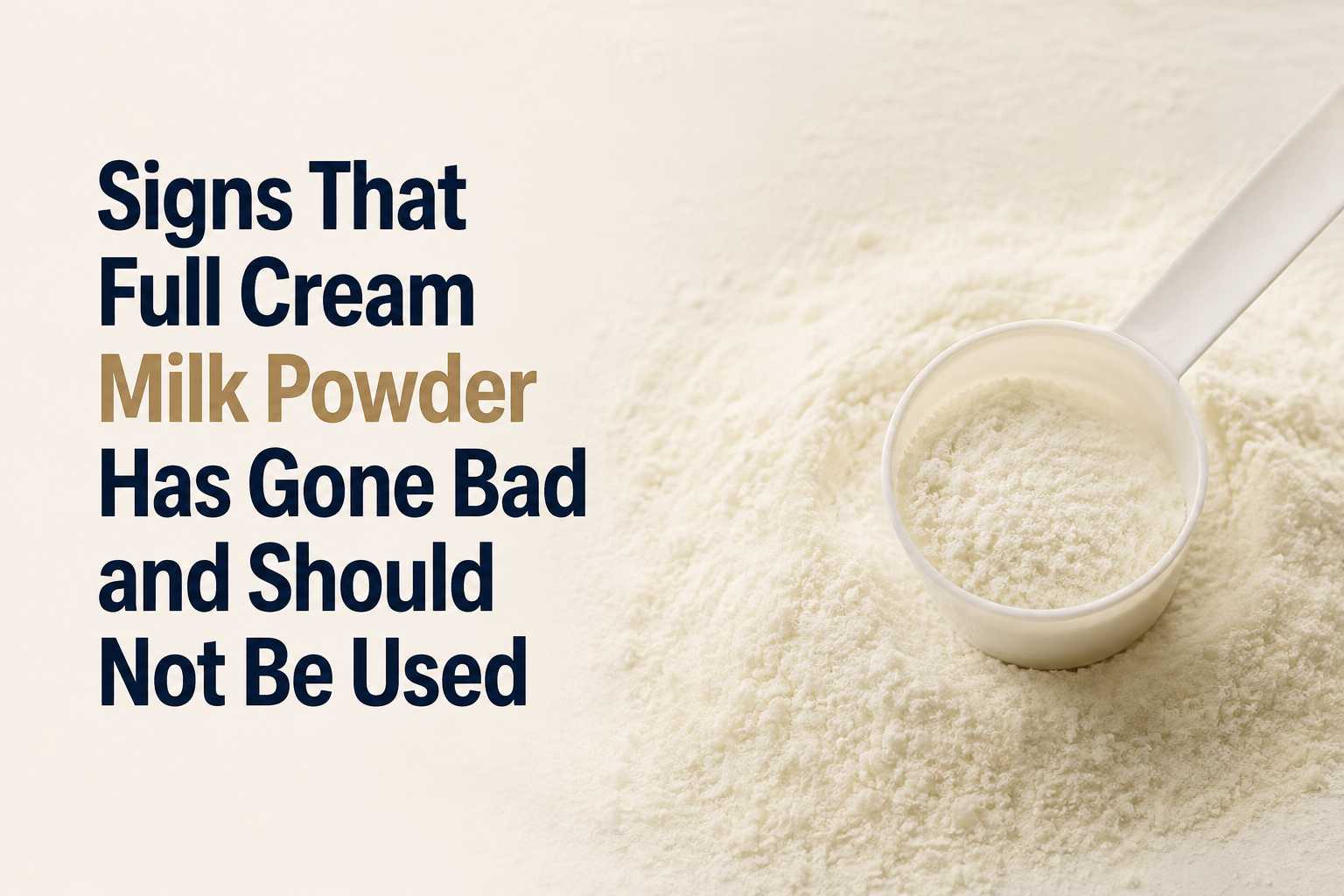
Fresh full cream milk powder should be light cream in color. It should smell mild and slightly sweet, feel loose and dry, and taste smooth when mixed with water. Any change from this points to spoilage.
How Can You Tell If Milk Powder Has Gone Bad?
Check these six signs before you use any pack of milk powder. If you spot even one, do not use it.
1. Has the Color Changed to Yellow or Brown?
Fresh milk powder is white to pale cream. Yellowing is one of the clearest signs it has spoiled.
This happens through a chemical reaction between milk proteins and natural sugars, the same reaction that browns toast. It means moisture reached the powder or it sat too long in warm storage. Once you see yellow or brown powder, throw it away.
2. Does It Smell Sour, Musty, or Rancid?
Fresh milk powder has a mild, clean, slightly sweet smell. A bad smell is one of the fastest ways to catch spoiled powder.
Rancid powder smells sour, musty, stale, or like old cardboard. In whole milk powder, it can also smell like rancid butter or old cooking oil. If the smell seems even slightly off, trust your nose and skip it.
3. Is It Clumped or Hard Instead of Loose?
Fresh milk powder should pour freely and feel loose. Small, soft clumps that break apart easily are usually just from humidity in the air. That is normal and safe.
But hard, solid clumps that will not break apart are a different story. This means real moisture damage has set in, and the powder may already be spoiling from the inside.
4. Do You See Mold or Foreign Particles?
This one needs no explanation. Any visible mold means the pack is contaminated. Throw it out immediately.
The same goes for insects or any foreign particles in the powder. Do not try to scoop around them. The whole pack should go in the trash.
5. Does It Taste Off After You Mix It?
Sometimes milk powder looks fine dry but tastes wrong once mixed with water. A bitter, stale, or sharp taste means it has spoiled, even if you cannot see anything wrong.
Gritty or slimy texture after mixing is another red flag. If a small taste test seems off, do not drink the rest.
6. Is There an Oily Film or Separation?
After mixing, check the surface of the liquid. A visible oily film or layer of separation means the milk fat has broken down.
This is common in older full cream powder because fat oxidizes faster than the rest of the powder. If you see this, do not use the batch.
Is It Safe to Use Expired Milk Powder?
Not always. Powder past its best-by date is not automatically unsafe, but you should still check it for the six signs above before using it.
The real risk is highest for kids, older adults, and anyone with a weak immune system. Spoiled milk powder can carry bacteria, and using it may cause stomach upset or worse.
One more rule: once you mix milk powder with water, treat it exactly like fresh milk. Refrigerate it right away and use it within 3 to 5 days. If it smells sour or turns thick after that, throw it out.
How Should You Store Milk Powder to Keep It Fresh?
Good storage is the best way to prevent spoilage in the first place. Follow these simple steps:
-
Keep it sealed. Use an airtight container after opening the original pack.
-
Store it cool and dry. A pantry or cupboard away from the stove works well.
-
Avoid direct sunlight and heat. Warm temperatures speed up spoilage.
-
Use it within a few months of opening. Full cream powder does not last as long as nonfat powder once exposed to air.
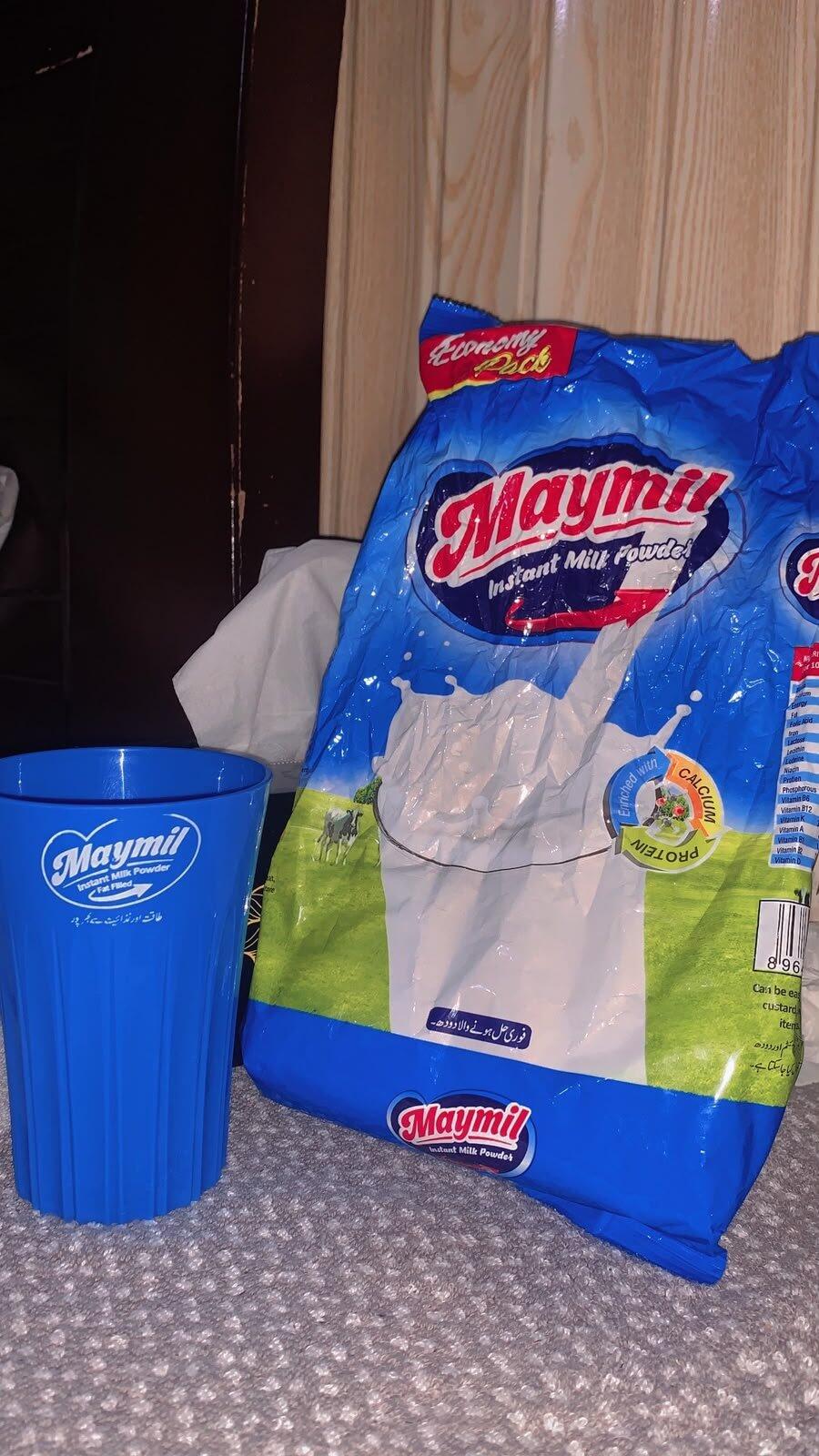
Packaging matters too. Foil packs with nitrogen flushing, like the ones used for Maymil Full Cream Milk Powder, help block out air and moisture from the moment the pack is sealed. That keeps the powder fresher for longer before you even open it.
Quick Checklist Before You Use Milk Powder
Run through this list any time you scoop out a fresh batch:
-
Color: Is it still pale cream, not yellow or brown?
-
Smell: Does it smell mild and sweet, not sour or musty?
-
Texture: Is it loose, or only lightly clumped?
-
Mold: Any spots, insects, or foreign bits? None allowed.
-
Taste: Does it taste normal once mixed with water?
-
Surface: Any oily film after mixing?
If everything checks out, your milk powder is good to use.
FAQ
How long does full cream milk powder last once opened?
Most full cream milk powder stays good for a few months after opening if stored in a sealed, airtight container in a cool, dry place. Heat and moisture shorten this significantly.
Can you get sick from bad milk powder?
Yes. Spoiled milk powder can carry bacteria that cause stomach upset, especially in kids, older adults, and people with weak immune systems. Always check for spoilage signs first.
Why does full cream milk powder go bad faster than nonfat powder?
Full cream powder contains milk fat, and fat oxidizes over time, turning rancid. Nonfat powder has almost no fat, so it lasts much longer.
Is yellow milk powder always spoiled?
Yes. Yellowing means moisture reached the powder and triggered a chemical reaction between proteins and sugars. Fresh powder should stay white to pale cream.
Can I still use milk powder that has small clumps?
Small, soft clumps that break apart easily are usually fine. Hard clumps that will not break apart mean moisture damage, and you should not use that batch.
How long can mixed milk powder sit in the fridge?
Once mixed with water, treat it like fresh milk. Refrigerate it right away and use it within 3 to 5 days.