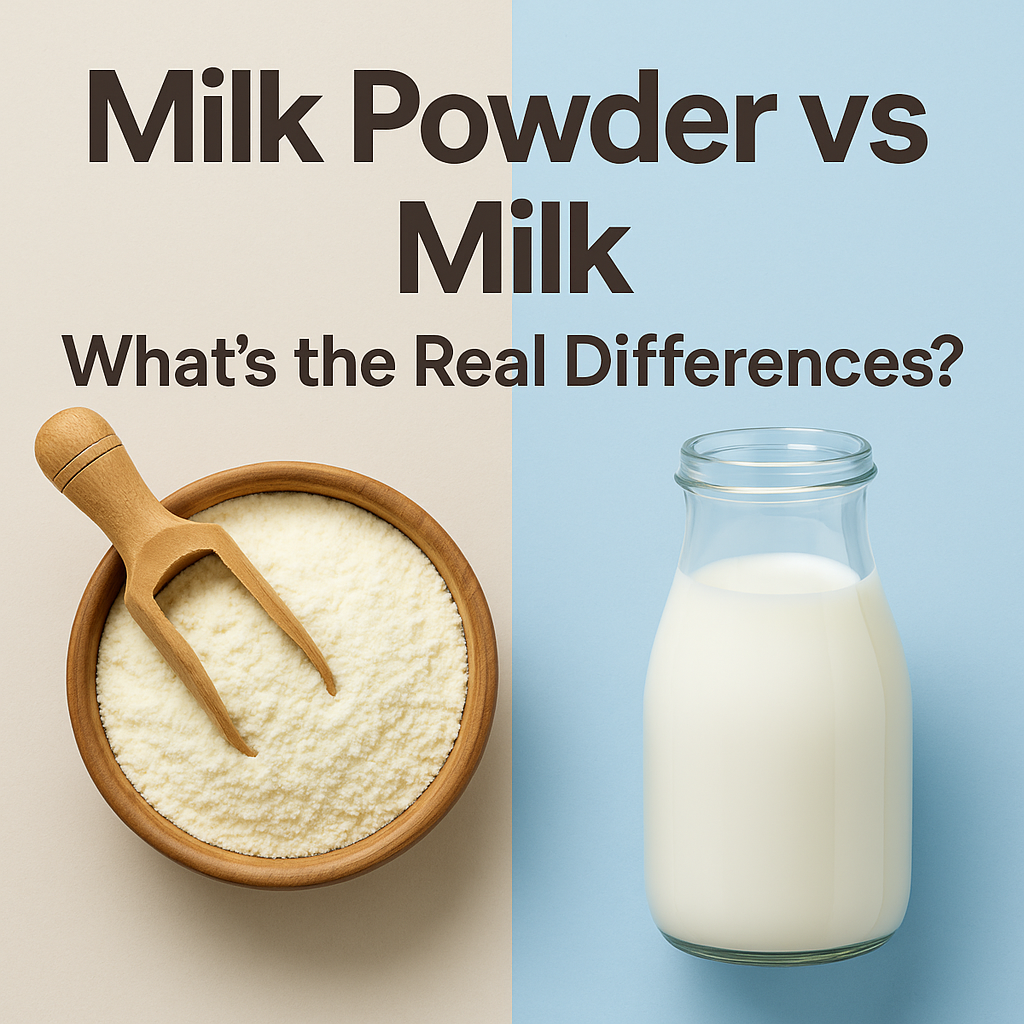
Milk Powder vs Milk is a topic that comes up in homes all the time, usually when someone wonders why both exist if they start from the same dairy. One sits in the fridge, the other sits in the cupboard, yet both end up in the same cup of tea. This small contrast often leads to questions about taste, nutrition and storage that people want clear answers for.
Once you look closely at how each form is made and used, a lot of everyday kitchen habits start to make sense. The difference between the two is not complicated, but it influences how your drinks turn out, how long your milk lasts and how much control you have in cooking. Understanding these points makes choosing the right one surprisingly easy.
What Is Milk Powder Made From?
Milk powder comes from fresh liquid milk that has been dried into fine particles.
The process begins with filtration and heating to remove harmful bacteria. The milk then enters a spray dryer. The liquid is turned into tiny droplets and exposed to warm air that removes the water quickly.
This drying method protects the natural nutrients. The fat, protein, calcium and minerals remain stable. Only the water content changes, which makes powdered milk easier to store and transport.
How Does Removing Water Affect Quality?
Removing water increases shelf life because microorganisms cannot grow without moisture. This is the reason milk powder stays safe at room temperature for months when kept dry and sealed.
How Do Milk Powder and Milk Taste Different?
Milk powder tastes like regular milk once mixed with water, but the texture can be adjusted.
You can make it thicker for tea, lighter for coffee or richer for desserts simply by changing the amount of powder.
Regular milk has a consistent liquid form and the same texture every time you pour it. Some people prefer its natural smoothness, especially when drinking it directly or using it in cold beverages.
How Does Milk Powder Mix Best in Drinks?
Powdered milk mixes best when added slowly to warm water.
This helps it dissolve evenly and prevents lumps. Once mixed, it blends smoothly into tea, coffee and cooking.
How is the Shelf Life?
Milk powder lasts longer because it contains very little moisture.
Dry conditions prevent spoilage and keep the flavour stable. It can be kept in cupboards, office drawers and travel bags without changing taste.
Liquid milk has a shorter shelf life because bacteria grow faster in moisture. It needs refrigeration at all times. Even a short period outside the fridge weakens its freshness.
How Do Their Nutritional Values Compare?
The comparison of Milk Powder vs Milk shows similar nutrition because both start as the same dairy.
Protein, calcium and minerals remain present in powdered milk. The spray drying process is fast, so nutrients do not break down easily.
The only major change is concentration. Powdered milk becomes dense when dry. Once water is added, the nutrition matches regular milk again. Some milk powders come with added vitamins for extra support.
How Are They Used in Cooking and Baking?
Milk powder works well in baking because it adds flavour without liquid.
Bakers use it to improve softness, structure and browning in bread and cakes. It also gives pancake batter a smoother rise. A spoon of powdered milk in dough helps make roti softer.
Regular milk works better in recipes that need natural moisture. Soups, desserts and sauces often rely on the liquid form to reach a balanced thickness.
How Do They Compare in Cost and Practicality?
Milk powder reduces waste because you prepare only the amount you need.
This is helpful for people who drink milk occasionally or use it mainly for tea, coffee and cooking.
Liquid milk may cost less per litre, but it spoils easily if unused. For larger families or daily drinkers, liquid milk still works well. Many homes keep both for flexibility.
How Should You Store Milk Powder and Milk?
Powdered milk should be kept dry and sealed tightly.
Moisture causes clumping and reduces freshness. A dry spoon and airtight container help keep the powder smooth.
Liquid milk should always stay cold. The pack should be closed properly after each use. If the smell or texture changes, it should not be consumed.
What Type of User Should Choose Milk Powder?
Milk powder suits people who want long shelf life, easy storage and adjustable texture.
It works well for offices, hostels, travellers and homes that make frequent tea or coffee.
What Type of User Should Choose Regular Milk?
Regular milk suits people who drink milk daily or enjoy it in cold beverages.
It is simple to use and familiar in taste.
What Is the Real Difference Between Milk Powder and Milk?
The real difference lies in storage, moisture content and flexibility.
Both come from the same dairy source. Powdered milk stays usable longer and gives more control in recipes. Regular milk offers natural texture and is ready to drink.
Your choice depends on how you use milk, how much you consume and how much storage space you have.
The Bottom Line
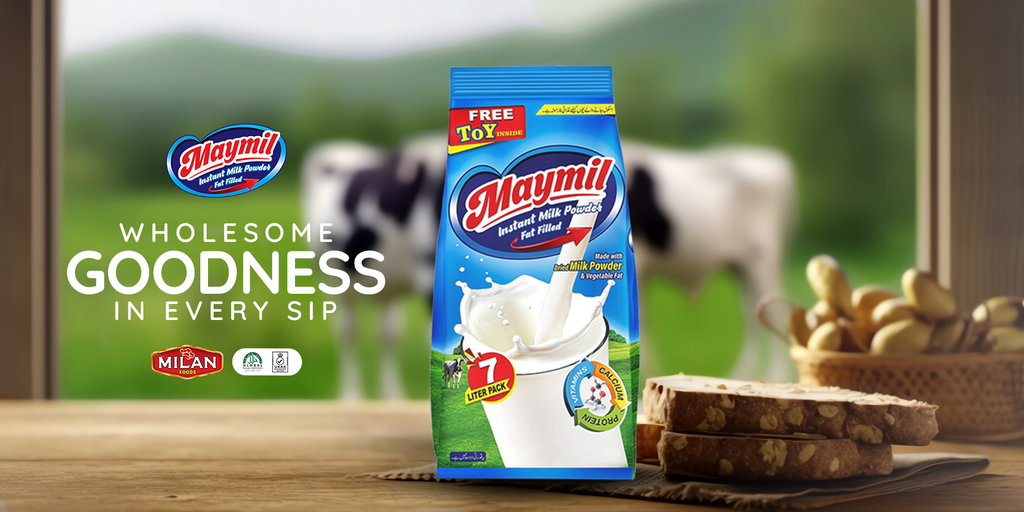
If you want milk that blends smoothly, stays fresh on the shelf and fits every kind of routine, Maymil Dairy powdered milk is ready for your kitchen. It comes from fresh dairy, has a clean taste and works across drinks and recipes with steady results. Try Maymil Dairy milk powder for simple, reliable quality that makes everyday use easier.
FAQs
Does powdered milk work well for people with lactose intolerance?
Powdered milk contains the same lactose as regular milk, so it affects sensitive individuals in the same way.
Can I replace regular milk with powdered milk?
Yes. Powdered milk can replace regular milk in most recipes when mixed with the right amount of water. It blends well in baking, sauces and everyday cooking, and gives a similar result to liquid milk.
What is better, milk or milk powder?
Both are good, and the better choice depends on you. Liquid milk suits daily drinking and cold beverages. Milk powder suits long storage, travel, cooking and making tea or coffee with steady thickness. Nutrition stays similar when powdered milk is mixed properly.