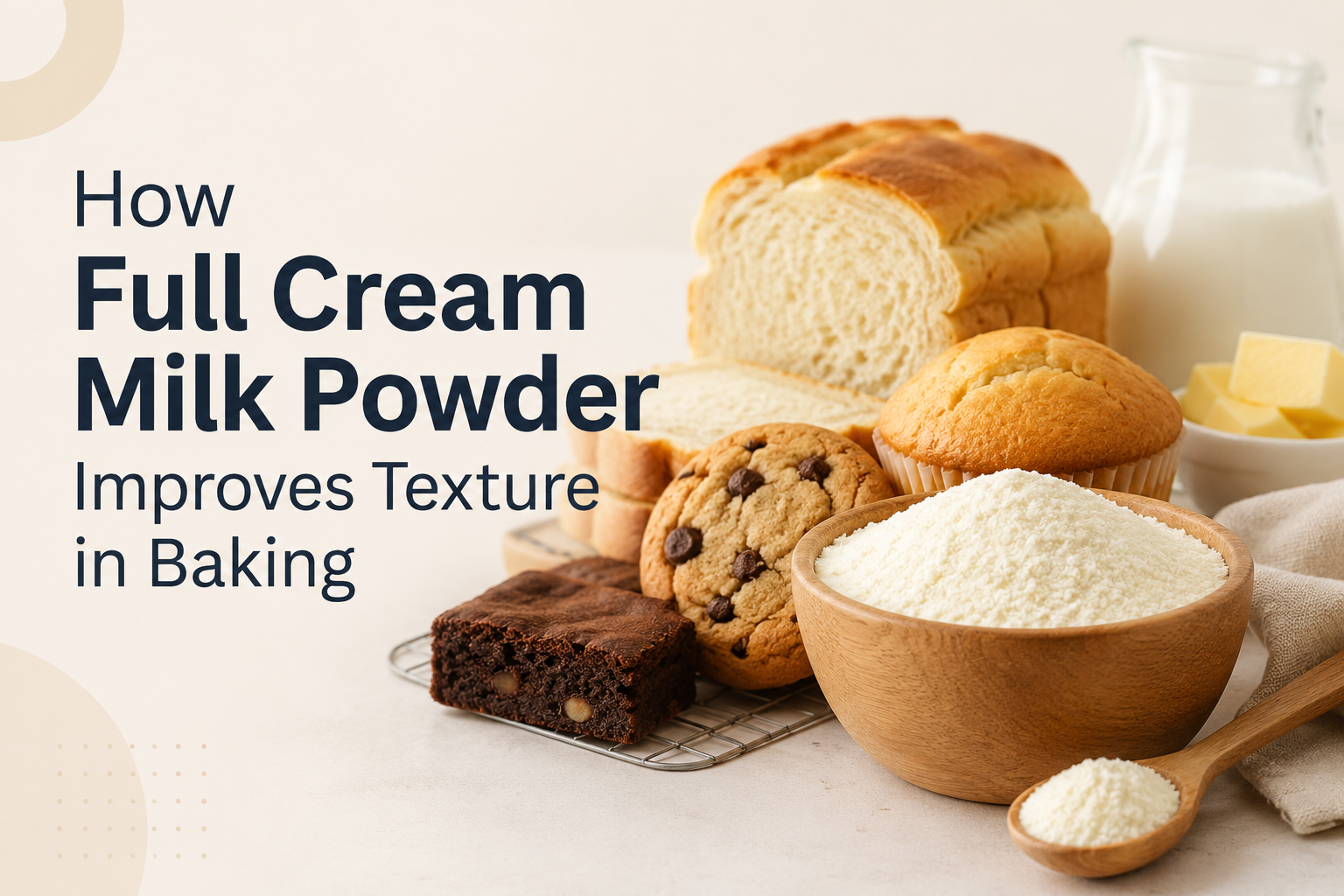
You follow the recipe carefully, but the cake still turns dry after a few hours or the cookies lose that soft bakery-style texture. In many cases, the problem is not the recipe itself. It comes down to one small ingredient choice.
Full cream milk powder helps baked goods stay soft, moist, and rich in texture. Bakers use it in cakes, bread, cookies, brownies, muffins, and frostings because it improves texture without making recipes complicated.
What Is Full Cream Milk Powder in Baking?
Full cream milk powder is made by removing water from whole milk while keeping the milk fat, proteins, and natural milk sugars.
These milk solids help improve baking texture because they blend directly into the batter or dough. Since there is no extra liquid added, bakers get better control over softness and moisture.
This is one reason bakery-style cakes and bread usually feel richer and softer than regular homemade baking.
Full cream milk powder is commonly used in:
-
Cakes
-
Bread
-
Cookies
-
Muffins
-
Brownies
-
Frostings
-
Dessert fillings
It also has a longer shelf life than fresh milk, which makes it convenient for regular baking.
How Full Cream Milk Powder Makes Cakes Soft and Moist
Soft cakes depend heavily on moisture retention. During baking, cakes lose moisture because of oven heat. If too much moisture escapes, the cake becomes dry after cooling.
Full cream milk powder helps slow this process.
The milk proteins absorb moisture during mixing and help hold it inside the cake crumb. This creates a softer texture and keeps cakes fresh for longer.
This works especially well in:
-
Sponge cakes
-
Vanilla cakes
-
Butter cakes
-
Tea cakes
-
Cupcakes
Milk powder also improves the crumb texture. Cakes usually feel smoother and slice more cleanly after baking.
Add 2 to 4 tablespoons of full cream milk powder to the cake batter to achieve bakery-style softness.
Why Cookies Taste Better With Full Cream Milk Powder
Cookies need the right balance between crisp edges and soft centers. Full cream milk powder helps create that texture naturally.
The lactose in milk powder browns during baking and gives cookies a richer flavor and deeper golden color.
Milk powder also helps cookie dough stay more stable in the oven. Some homemade cookies spread too much and turn flat. Milk proteins help reduce excessive spreading and improve texture.
This works really well in:
-
Chocolate chip cookies
-
Butter cookies
-
Red velvet cookies
-
Homemade biscuits
-
Shortbread cookies
Some bakers mix milk powder into melted butter before adding dry ingredients because it gives cookies a deeper baked flavor.
How Full Cream Milk Powder Helps Bread Stay Soft Longer
Bread texture depends on moisture balance and gluten structure. Full cream milk powder helps improve both.
The milk proteins support the dough structure while the milk fat softens the crumb. This gives bread a lighter and fluffier texture after baking.
Bread made with milk powder also stays softer for a longer time compared to bread made without milk solids.
This is why milk powder is commonly used in:
-
Sandwich bread
-
Burger buns
-
Dinner rolls
-
Milk bread
-
Pizza dough
The natural milk sugars also help bread brown evenly in the oven and create a golden crust.
Why Muffins and Brownies Feel Richer
Brownies and muffins can quickly become dry if the ingredient balance changes slightly. Full cream milk powder helps improve moisture retention and creates a smoother texture.
In muffins, the crumb stays softer after cooling. In brownies, the center becomes richer and slightly creamier.
This works especially well in:
-
Chocolate muffins
-
Banana muffins
-
Blueberry muffins
-
Fudge brownies
-
Chocolate brownies
Milk powder also helps reduce dry edges after baking.
How Full Cream Milk Powder Improves Frostings and Fillings
Full cream milk powder is also useful in frostings and dessert fillings because it improves creaminess and texture.
When added to buttercream frosting, it creates a smoother consistency and helps frosting spread more evenly.
Some bakers also add it to whipped cream frosting because it slightly improves stability and thickness.
Milk powder is commonly used in:
-
Custards
-
Cream fillings
-
Homemade chocolate spreads
-
Milk desserts
-
No-bake desserts
Sifting the powder before mixing helps create a smoother finish without lumps.
How Much Full Cream Milk Powder Should You Use?
Small amounts usually work best because too much milk powder can make baked goods dense.
Here’s a simple guide many bakers follow:
| Baking Recipe | Recommended Amount |
|---|---|
| Cakes | 2 to 4 tablespoons |
| Cookies | 1 to 3 tablespoons |
| Bread Dough | 2 to 5 tablespoons |
| Brownies | 1 to 2 tablespoons |
| Frostings | 1 to 3 tablespoons |
Recipes with lower fat content usually benefit more because milk powder adds richness naturally.
When Should You Add Full Cream Milk Powder?
The best time to add full cream milk powder is during the dry mixing stage.
For cakes, cookies, brownies, and muffins, mix it directly into the flour before adding wet ingredients. This helps spread the milk solids evenly through the batter.
For bread dough, add it with the flour, yeast, sugar, and salt during the first mixing stage.
In frostings and fillings, sift the milk powder first for a smoother texture.
Why Bakers Use Full Cream Milk Powder Instead of Only Fresh Milk
Fresh milk contains water along with milk solids. Full cream milk powder gives concentrated dairy solids without adding too much extra liquid.
This gives bakers better control over baking texture.
Milk powder also helps with:
-
Better browning
-
Richer dairy flavor
-
Softer crumb texture
-
Longer freshness
-
Consistent baking results
This is why many bakery cakes, cookies, and breads feel softer and richer than homemade versions.
Simple Baking Tips for Better Texture
A few small baking habits can improve results even more when using milk powder.
- For cakes, avoid overmixing the batter because it can make cakes dense.
- For cookies, chilling the dough before baking helps improve texture and flavor.
- For bread, proper kneading and proofing help create a softer crumb.
- Room temperature ingredients also help milk powder blend smoothly into batter and dough.
These small changes can noticeably improve homemade baking results.
Conclusion
Full cream milk powder helps create softer cakes, fluffier bread, richer brownies, smoother frostings, and chewy bakery-style cookies. The milk proteins improve structure, the milk fat adds softness, and the natural milk sugars help baked goods develop better color and flavor during baking.
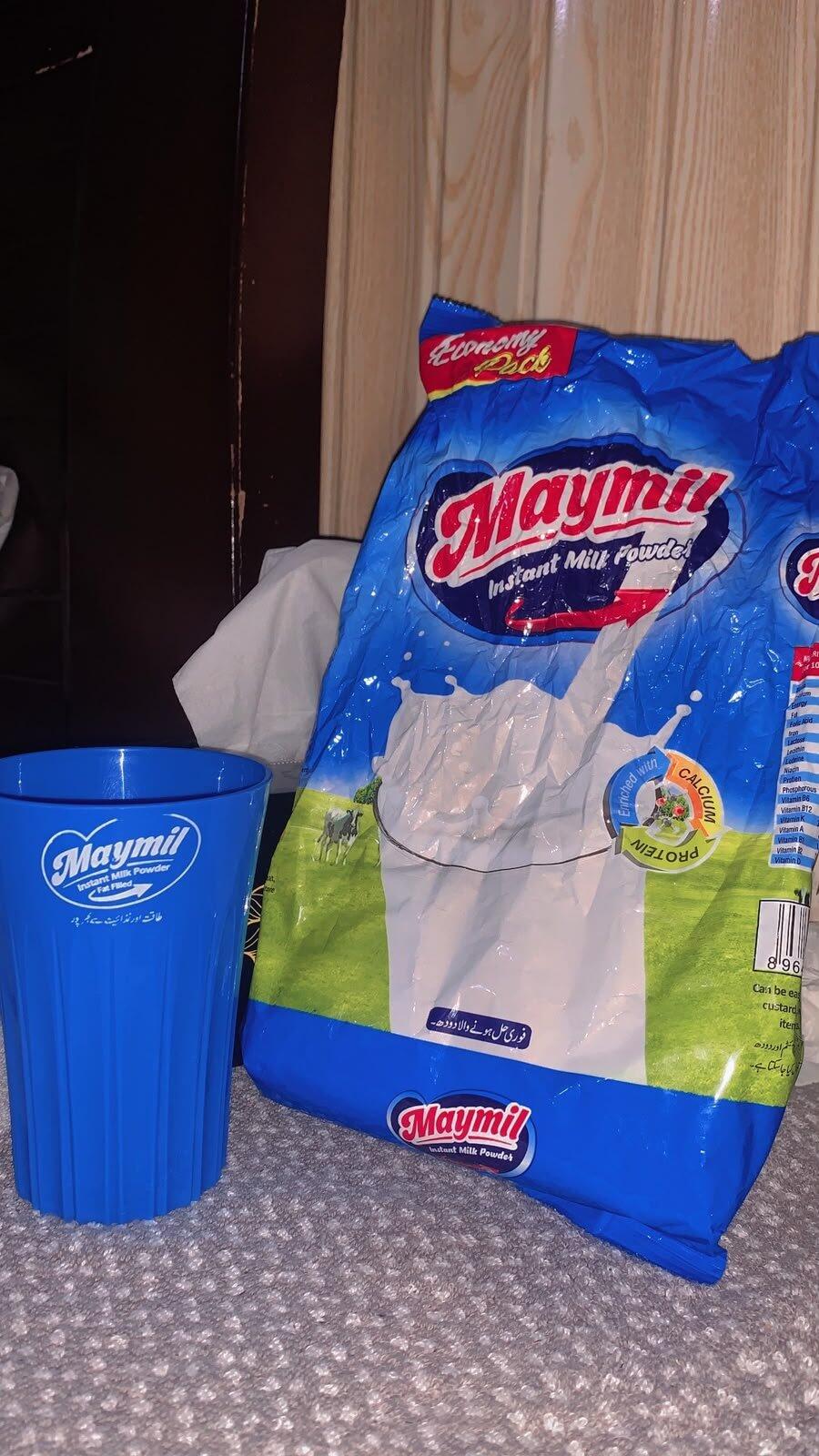
If you want homemade baking to feel softer, fresher, and closer to bakery quality, Maymill Full Cream Milk Powder can help you get better results with simple recipe changes and consistent texture in every batch.
FAQs
What is full cream milk powder and why use it in baking?
Full cream milk powder is made by removing water from whole milk, retaining its fat, protein, and sugars. In baking, it adds richness and helps retain moisture. Unlike liquid milk, powder blends easily into doughs and batters without extra liquid. Bakers in Pakistan often use it in cakes, cookies and breads to achieve a soft, “bakery-style” texture and a subtle dairy flavor (important where fresh milk may spoil quickly).
How does milk powder make cakes and bread softer?
Milk powder’s proteins and fats help trap moisture during baking. Proteins absorb water and form a tender crumb, while milk sugars (lactose) encourage browning and flavor. In cakes, adding a few tablespoons of full cream milk powder keeps the crumb moist and soft for longer. In breads, the proteins strengthen dough structure and the fats give a fluffier, lighter loaf. This means cakes and bread made with milk powder stay fresh longer, which is why Pakistani bakers rely on it for lasting softness.
Can milk powder improve the texture of cookies and pastries?
Yes. In cookies and pastries, milk powder helps balance crispness and chewiness. The lactose browns in the oven, giving a golden color and richer flavor. It also stabilizes dough so cookies don’t spread too much, leading to crisp edges with soft centers. In pastries (like parathas or biscuits), a little milk powder can add flakiness. Many Pakistani mithai (sweets) and snacks incorporate milk powder for this reason.
How should I mix milk powder to avoid lumps?
Lumps form when dry milk powder contacts hot liquid too quickly. The fix is to first dissolve milk powder in a small amount of lukewarm water, stirring into a smooth paste. Then gradually add the rest of the liquid while mixing. Always use a dry spoon and airtight container for storage – moisture causes clumps. If lumps do form, you can sift them out or re-blend the powder. Storing the powder in cool, dry conditions (away from steam and heat) also helps keep it lump-free.
How long can I keep full cream milk powder after opening?
Properly stored full cream milk powder stays good for several months. Keep it sealed in an airtight container in a cool, dry place. In Pakistan’s climate, avoid humidity – you might use silica packs to absorb moisture. According to Maymil, if kept sealed, opened milk powder can stay smooth for weeks or even months. Check the smell and color before use; discard if it smells sour or has changed color. (Used daily, most households finish a pack long before it spoils.)
Can full cream milk powder fully replace liquid milk in recipes?
Full cream milk powder can replace fresh milk on a dry basis. For baking, a general rule is ¼ cup milk powder + 1 cup water = 1 cup whole milk. This substitution avoids extra moisture in recipes. In Pakistani kitchens, many use powdered milk for baking and tea interchangeably. However, note that liquid milk contributes both moisture and fat – powder adds fat and solids without extra liquid. For rich baked goods, full cream powder often works well; for lighter recipes, skimmed milk powder could be used. Always adjust the recipe’s liquid accordingly.