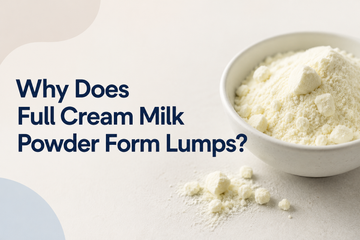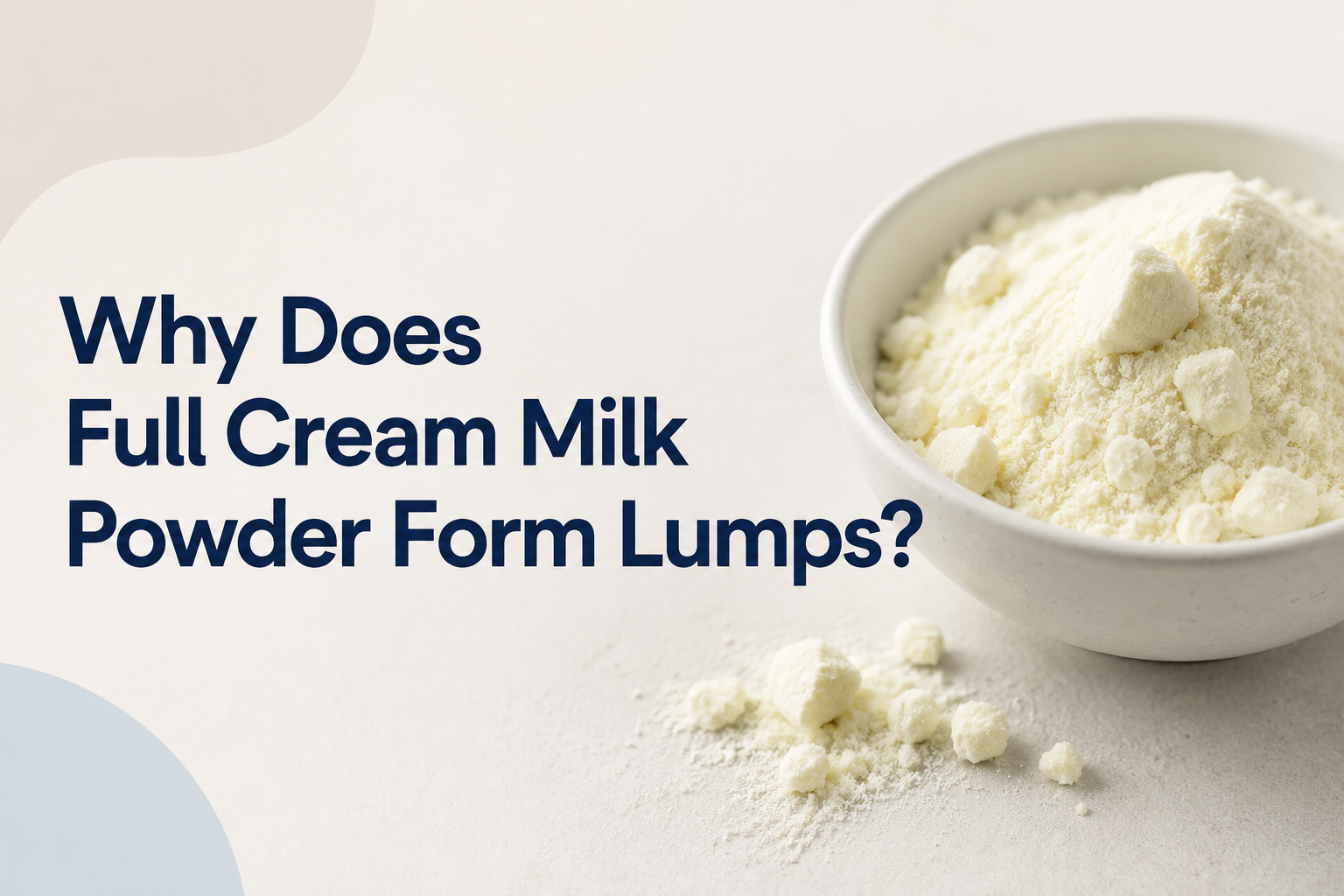
You open your milk powder, scoop it out, and instead of a soft, smooth texture, you see small lumps. Then you try to mix it, and those clumps just refuse to dissolve. It can be annoying, especially when you’re in a hurry.
The good part is, this doesn’t happen randomly. There’s a clear reason behind it. Once you understand what’s going on, it becomes easy to stop it and even fix it when it happens.
What causes lumps in full cream milk powder
Full cream milk powder is made from real milk that has been dried into tiny particles. These particles carry fat, protein, and natural milk sugar.
When moisture touches these particles, even in a small amount, the surface becomes slightly sticky. That’s when they start clinging to each other and form lumps.
And this moisture isn’t only from water. It comes from the air too. Every time you open the container, a bit of moisture enters. It doesn’t show right away, but slowly it builds up and turns smooth powder into clumps.
Why full cream milk powder clumps more easily
Full cream milk powder has more fat, which is why it tastes richer and creamier. But that same fat reacts to heat.
When the temperature around it rises, the fat softens a little. Now the particles are more likely to stick together. Add a bit of moisture into the mix, and clumps start forming faster.
That’s why full cream milk powder needs slightly better handling compared to skim milk powder.
How humidity affects milk powder in your kitchen
Humidity simply means there’s moisture in the air. You might not feel it, but the powder does.
Every time the container is opened, the powder pulls in a bit of that air. This keeps happening again and again.
In warmer areas or during rainy weather, the air holds more moisture. That’s when you’ll notice lumps forming quicker than usual.
If the powder doesn’t feel light and free-flowing anymore and starts feeling a bit heavy, that’s a sign moisture has already started doing its job.
Small habits that cause milk powder to form lumps
This is where most of the problem comes from, and it’s usually unnoticed.
A slightly wet spoon can start the whole process. Even a few drops of water are enough.
Keeping the container open near hot tea or cooking lets steam get inside. That steam carries moisture, and it settles into the powder.
Storing it near heat or not closing the lid properly also adds to the issue. These small habits don’t seem like much, but over time they lead to clumping.
Why lumps form when mixing milk powder
Sometimes the powder looks completely fine, but as soon as you add water, lumps appear. This is all about how you mix it.
When hot water hits dry powder, the outer layer dissolves quickly and forms a thin coating. Inside, the powder stays dry. That’s how lumps are formed.
Adding too much powder at once also makes it harder for water to mix evenly.
A simple fix is to add a little water first and mix it into a smooth paste. Then slowly add more water while stirring.
Using lukewarm water instead of very hot water also makes a big difference.
How to store full cream milk powder properly
Good storage can save you from most of these problems.
Keep the powder in an airtight container and close it tightly after every use. Store it somewhere cool and dry, away from heat and sunlight.
Always use a dry spoon. This one habit alone can prevent a lot of clumping.
Avoid putting it in the fridge. When you take it out, moisture forms because of temperature change, and that moisture ends up in the powder.
If your area is humid, adding a small food-safe moisture absorber can help keep things dry.
Does powder quality and particle size matter
Yes, it does, and you can actually notice the difference.
Finer powder absorbs moisture faster because it has more surface area. That makes it more likely to form lumps.
Some brands process their powder in a way that keeps the particles slightly larger, so they flow better and stay smooth longer.
That’s why one milk powder may stay fine while another starts clumping under the same conditions.
Can you still use lumpy milk powder
In most cases, yes, you can.
If the powder smells normal and looks fine, it’s still safe. The lumps are usually just from moisture.
You can press soft lumps with a spoon or your fingers. For harder ones, using a sieve works well. A quick blend in a dry blender can also bring it back to a smooth texture.
If you notice a sour smell or a change in color, then it’s better not to use it.
Simple ways to keep milk powder smooth every day
Keeping your milk powder smooth doesn’t take much effort, just a few small habits.
Keep a small amount in a separate container for daily use so the main pack stays sealed. Open it only when needed and close it right away.
Store it away from steam and heat. If you live in a humid place, smaller packs work better since they get used up faster.
These simple steps go a long way in keeping the powder easy to use.
What is the best way to mix milk powder without lumps
Start by adding a small amount of water to the powder and mix it into a smooth paste. This helps break the particles evenly.
Then slowly add more water while stirring. This prevents dry clumps from forming.
Lukewarm water works better than very hot water. If you want an even smoother texture, you can use a whisk or blender.
Conclusion
Lumps in full cream milk powder come down to moisture, heat, fat content, and everyday handling. Once you manage these, the powder stays smooth and mixes easily.
If you want a milk powder that gives a smooth mix, rich taste, and consistent results every day, Maymil full cream milk powder is a smart choice to keep in your kitchen.
FAQs
Why does my milk powder get hard lumps over time even when sealed?
Even in a sealed container, small amounts of air remain inside. That air contains moisture. Over time, the powder slowly absorbs it, especially if the temperature changes. This causes the particles to stick together and form hard lumps.
Can temperature changes alone cause milk powder to clump?
Yes, temperature changes can lead to clumping. When the powder shifts from cool to warm conditions, it can create slight condensation inside the container. This adds moisture, which makes the powder sticky and leads to lump formation.
Does stirring milk powder fast prevent lumps?
Fast stirring alone does not prevent lumps. If dry powder is hit with hot water, a coating forms quickly and traps dry powder inside. Starting with a paste and then stirring gradually works much better than stirring fast.
How long can full cream milk powder stay lump-free after opening?
If stored properly in a cool, dry place with minimal air exposure, it can stay smooth for several weeks. In humid conditions, clumping may start within days if the container is opened frequently.